Thursday, August 26, 2010

After the deluge: porcini!


After nearly two weeks of pouring rain and no true August in sight, Friday and Saturday had finally brought a blazing 26 degrees back again. And with it popped up mushrooms, among them a bunny-sized one in our backyard, most likely inedible but quite cute. After venturing in vain for the gigantic white puffball we settled for a lurid bolete close to our house. My mum pointed us at him referring to the Polish hauler who turns up at my dad's factory about once a year and manically crawls beneath the trees, taking bags of this lurid bolete (and offering them to my frightened mum who happily refuses). Not us! (we thought.) But then, slight discomfort arose thinking of an intense mushroom death, albeit psychedelic it might be.
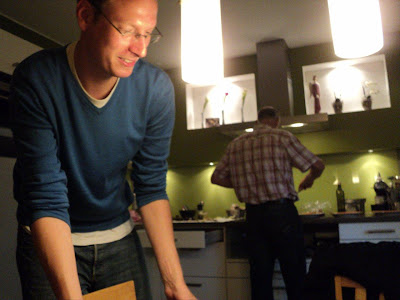
This made me go to Pete's dad today who collects mushrooms for years and just walked over the doorway, still dripping from the rain that decided to revisit, now with 100 litres tonight.
In his hand though a shopping bag full of porcini which he proudly showcased and turned right into a steaming, meaty mushroom mess. Cut them in thin slices, fry in oil or butter until most of the liquid has gone and then add a finely cubed onion for about every 150-200g of mushrooms, leave to become translucent, add half a crushed garlic clove, and leave it be for 2 more minutes. Then season with salt, pepper and a good handful of parsley. Pete's dad put a sourdough bread with cold butter to serve on the side, good for adding something substantial and perfectly complementary.

So if you have some rain and then some sun around this time of the year, check out the base of beech trees on your next walk out, maybe you can find some of these tasty fellows (here's how by Leslie Land, nothing more to say)!

Thursday, August 12, 2010

Strawberry Fields Forever?

Imagine nearly a thousand varieties of strawberries, then take more than a hundred varieties of gooseberries, raspberries and countless other fruit and berry seeds and their living plants in a field, 90% of it only found in this special place: the Pavlovsk Seed Station, found outside of St. Petersburg, Russia.
Initiated in 1926 by the dedicated Nikolai Vavilov, it has been saved through a worldwar (amongst others due to starvation of the scientists dedicated to the survival of the countless peas, beans and other seeds that could have saved their life), and decades of socialist regime plus the onset of capitalist Russia which now could be its death sentence. Private housing estate has seized the land and the final decision if one of the oldest global seed banks can be bulldozed for houses will be decided this week in the Russian court.
Relocation of the seed station is impossible as it is an in situ conservation station: no preservation in coolers and movable packages but largely on fields and in gardens where seeds can further adapt and exhibit traits that might be highly valuable for future agriculture. Think drought resistant species, think flooding resistant species, think early or late maturing species, finally think much-more-tasteful-than-now species.
Please sign the petition of Martin Wik Fowler whose dad has been working a big part of his life (amongst many others!) on building and preserving this unique collection of agrobiodiversity. If you would like to read some of the interesting press coverage, check out BBC, the Guardian or USA Today.

Thursday, July 29, 2010

Public fruit tree map, finally for Europe!


Once upon a time five friends (one of them above) have gone on a rowing trip, and saw many fruit trees on the shore that bore even more fruit. They realized that the fruit they took for their trip came from Argentina and how the fruit on the riverbench wasn't taken by anyone and how that made for a bit of a sad situation. The idea of a public fruit tree map for Europe (and beyond?) was born. Now it is alive: mundraub.org (mundraub = a charming German word for hand-to-mouth theft of food) and also shows herbs, nuts, berries and even juice mills. If you're capable of reading or writing German, use it across the whole Europe map by finding and adding (even Morocco features some public lemon trees)! The idea behind is that so many public fruit trees, as well as private fruit trees, bear beautiful fruit that no one harvests and that rot away while we import apples from New Zealand or Walnuts from the US. Web 2.0 has found another way for those trees, and also private tree owners that do not have the time or interest to harvest their tree are called to make an entry allowing harvesting of their fruit. This project has gotten some good press coverage lately and even received the German sustainability award. Yay for public food!

I've known of such thing before from San Francisco, with the neighborhoodfruit site. There though you have to register (for free) but a nice little fruit ripe alarm is included, so you can get a notice of ripe cherry trees in the city on your phone, for example.

Not bad? Not bad! Now we only need to wait for the global map, accessible in everyone's language. Volunteers?

Saturday, July 24, 2010

The 100 mile diet - days 3-5


Above you see the pizza progression of Thursday, long in the making, short in the eating and so longed for. Only the yeast had an unknown descent. We have gotten to some limits, a big one named travelling that makes it virtually impossible to eat anything local, unless you prepare it beforehand and take it with (which, ironically, makes for well-travelled food again).

Potatoes do take a major part for carbohydrates unless you love to bake. Yesterday we were in the Netherlands, standing in the shop and trying to withstand a major craving for pasta, sad about all those Italian noodles there, and having too big an appetite to make it ourselves. A quick look into the cooling shelf made our stomach jump up and down in excitement - local and fresh pasta! Some cream, shii take mushrooms (yes, gastronomically far, but they did come from the next village) plus leek and extra strong poke-in-the-eye onions from the garden were heaven.

Two more days to go and we start thinking about what we will eat first on Monday night; it usually involves chocolate and coffee ...

Tuesday, July 20, 2010

Day 2 of 100 miles

Today was much easier than yesterday! Eggs & bread for breakfast and then a little bikeride to the market, a local organic farm grew so much themselves that we got tomatoes, salad, spring onions, courgette and even eggplant and pointed pepper which made Jonas very happy. Some carrotcheese and eggs were also found and tonight's dinner was a courgette potatoe spring onion oven dish, topped with some cream and oven roasted tomatoes, plus a good salad as a starter.

Still: We ate a pineapple about to perish (why let things go to waste?). Vera offered us a piece of melon (why pass up on friendly offers?). Some wine to accompany dinner. But no coffee today!

Monday, July 19, 2010

100 miles a week

Last summer, Jonas and I went wwoofing (great thing but to that, another time) on beautiful Channel island Guernsey. A great couple hosted us and among all of the inspiring things they have spent their life with was (if I remember correctly a week of) the 100 mile diet: eat only what's been grown, reared or caught 100 miles (yes, 160 kilometres) around you. While in process, taste what your region has to offer, be surprised at what it should have to offer but does not (anymore), find out how it is to minimize food miles, eat fresh, talk to people providing your food in order to track down the way it might have travelled. Have fun hunting it down!

This summer we thought why not give it a try and see how we might emerge in this 1 week-plea. So many things are in season right now, we are in Oldenburg (close to the Northern Sea = fish!), many milkproducts are produced in this region ... Should be easy?

Today was day 1, and we decided to start after lunch time shopping. Oh the lunch hunger. We had to wait and ran right into some rueful extension of our non-100 mile diet. Canteen meal: Pikeperch from Russia, potatoes from who knows where. Aww.

But then! Monday is the worst day in Oldenburg to start a 100 mile diet, because it is the only weekday without a farmers market. This fact made us bike and bike, only to find a store that prouds itself on "quality right from the producer", in it a lady that informed us only strawberries and the long-gone asparagus are from their farm. The rest comes from wholesalers. Off to the organic supermarket besides, maybe they know something about the origin of their produce?

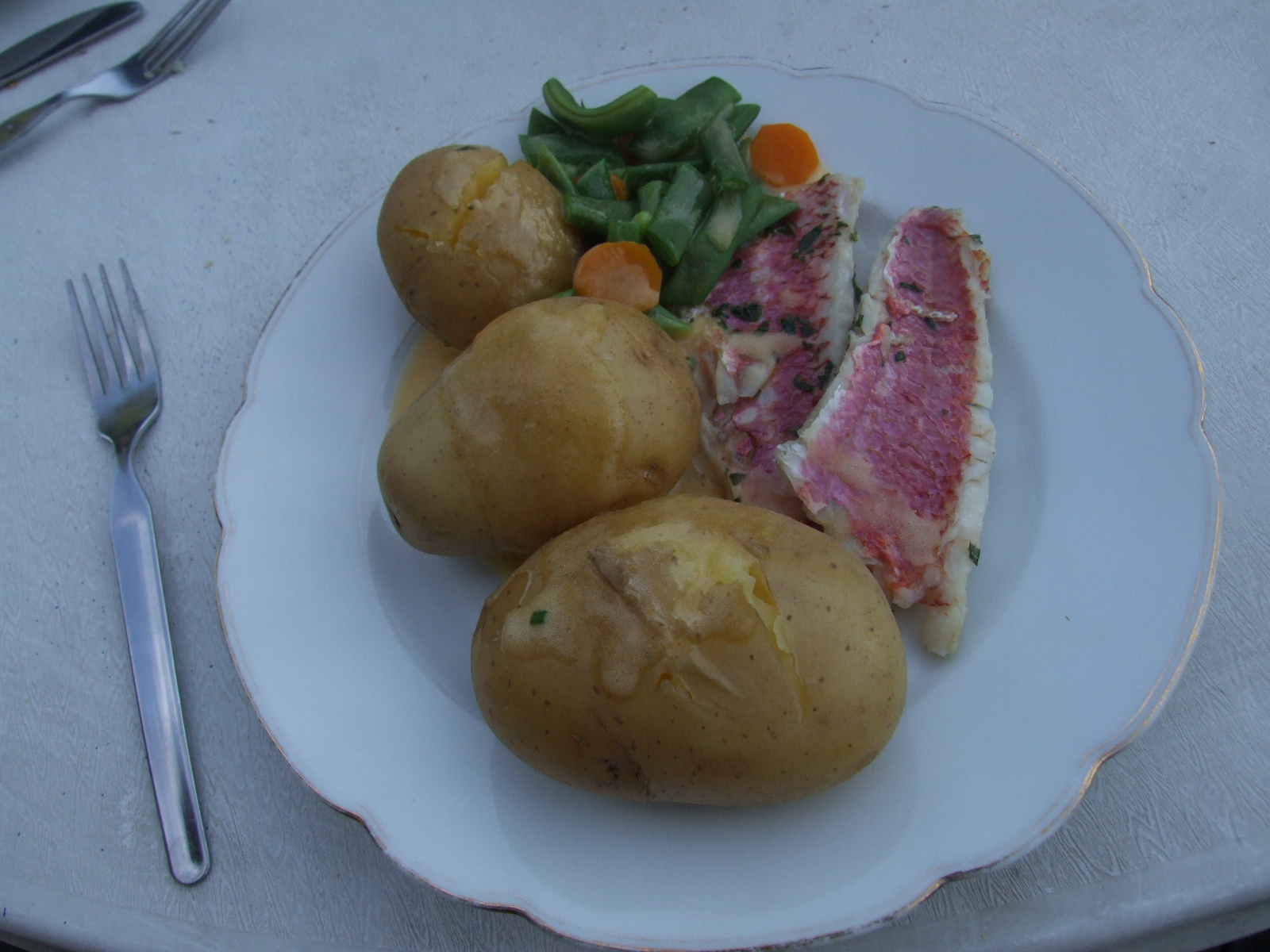
Nope. Only country indications. Nearly hopeless we saw ourselves eating bread and butter for dinner and were about to leave when a little label in an onion box poked my eye. Turned out nearly every veggie box has one, specifying their place of origin (if you're ever interested)! Turned out only carrots, runner beans and the very disliked fennel were regional. We chose for the former, some milk, butter and cream (local creameries in abundance, thank you region), and took some red mullet from the Northern Sea on the way back. Looked for suitable potatoes and only got as regional as the Pfalz. Quite some more kilometres than expected. But we had to eat some carbs too ... With some herbs from the balcony, plus eggs and butter made into a Hollandaise, everything turned out to be a nice little dinner:

Thursday, July 8, 2010

Strawberry Mob


On Saturday it happened! Youth Food Movement Netherlands (born out of Slow Food NL) took a tractor, put Jan Robben and 400 boxes of his smaakaardbeien (Dutch for: wonderfultastestrawberries) on the back and drove right onto the grass in front of the museumsplein in the centre of Amsterdam. Via facebook and related media plus lots of word to mouth, the strawberry mob had been organized, now ready to completely buy out the 400 boxes within a quarter of an hour.

Why the mob, why the fuss, why the fun? Jan Robben is a strawberry farmer who selects for the taste of his fruit, not their shelf life. This makes him different to what supermarkets expect of strawberry farmers and that is why he has a hard time getting into there. In order to raise awareness and to motivate consumers to ask for such tasteful little fruits at their retailers, YFM, Jan Robben and the smaakardbeien made this trip to the city, threw a jazzy party after and let those not filled up yet taste all the different kind of strawberries from local farmers. What a delight! Note: For tomorrow (9th of July) there is a connected YFM action thingi, so if you happen to be Dutch, grab your phone and call the PLUS supermarket in your neighbourhood to ask whether they have some Jan Robben strawberries!

When I travelled on with my two boxes, the smell alone of the strawberries made a store owner peek into my bag and ask what kind of strawberries I have there. I offered her but she refused to, because they are not organic- Jan Robben does use a minimal amount of pesticides and mineral fertilizers though, has a whole biodiversity plan laid out and implements water- and energy saving measures. But in times of anonymous farmers, people can only believe labels, often shunned by farmers because of the costs that come with it (Jan Robben is certified under the milieukeur label though, but which average consumer makes his way alive through the label jungle these days?). Buying from farmers you know can help. Glad that I got to know Jan Robben and thumbs up for his website! Imagine every farmer had a website explaining practices, philosophy and even camping possibilities close to his farm (alas, only in Dutch)!